What Will They Say About Us?

Generations before us made decisions that transformed Oregon. Now it's our turn to think about the community we're leaving behind.
More than a century ago, Oregon looked very different.
There were farms where neighborhoods stand today. Dirt roads crossed fields that would eventually become subdivisions, industrial parks, and places where families gather on summer evenings.
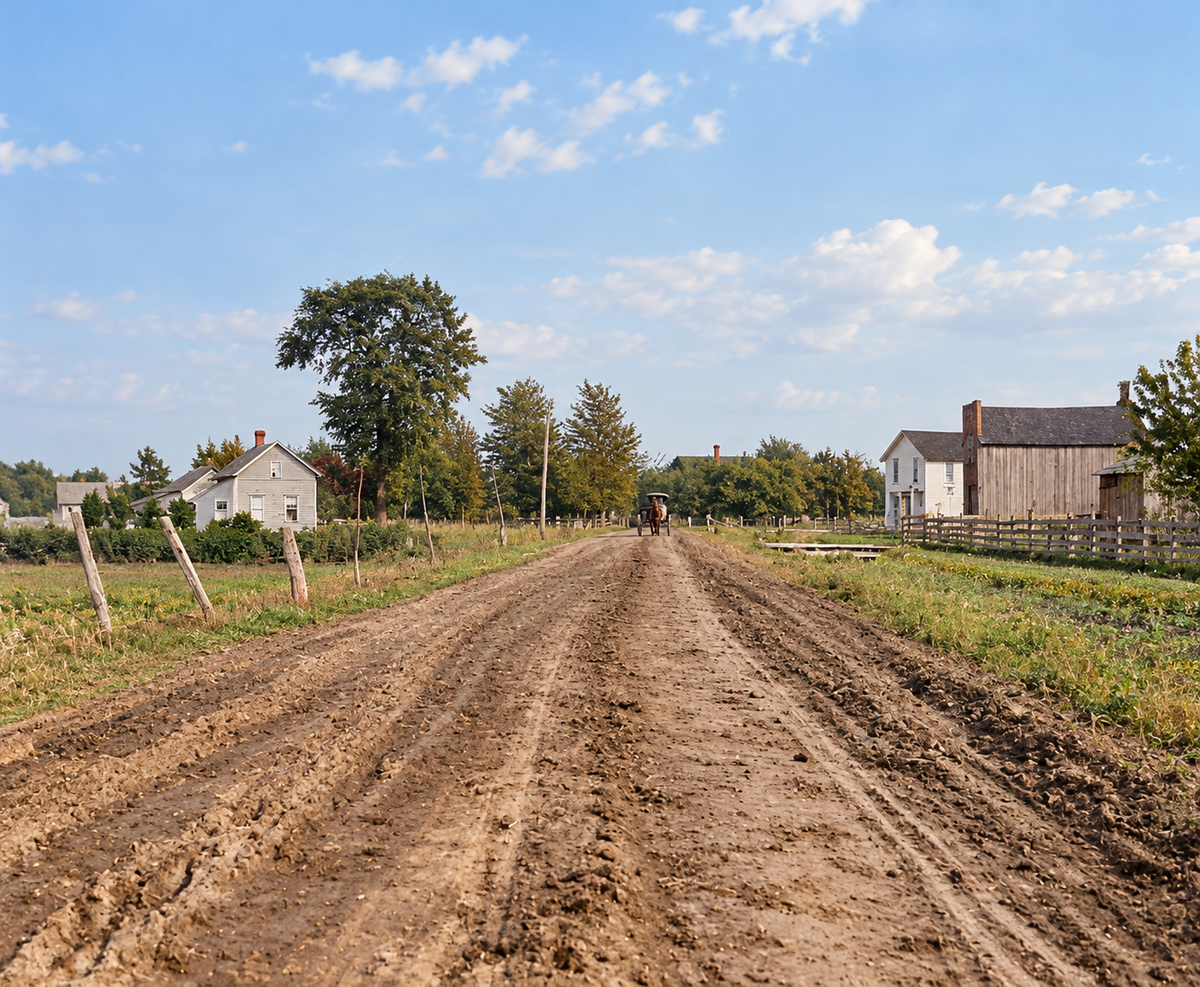
In 1894, photographer Cleo Keller captured a stretch of rural road in a place known as Bayshore Corners. A horse-drawn carriage traveled between farmhouses, past wooden fences and open fields.
The people in that photograph couldn't possibly have imagined the Oregon we know today.
Or could they?
Perhaps they sat around kitchen tables discussing what might come next. Maybe they gathered after church, exchanging opinions about new roads, businesses, and the changes taking place around them.
We can only imagine those conversations. Some people undoubtedly welcomed change. Others may have worried about what it would mean for the community they knew.
But they made decisions.
And those decisions helped create the Oregon we inherited.
An Unlikely Place
Consider Eagles Landing.
Today, it's a beautiful golf course surrounded by attractive homes and neighborhoods. Families live, work, and raise children in an area that, not so terribly long ago, was largely farmland.
Imagine explaining that transformation to someone standing along Bayshore Road in 1894.
Someday, people will pay money to chase little white balls across these fields. They'll build beautiful houses nearby. And they'll travel around the course in small electric vehicles.
You might get a few puzzled looks.
Perhaps a good laugh.
And yet, here we are.
Then there's Maumee Bay State Park.
Wetlands, beaches, trails, cottages, wildlife, and a golf course, all along the shore of Lake Erie. It's the sort of place that makes an out-of-town visitor wonder whether the GPS has developed a drinking problem.
Because Oregon is also home to refineries, power stations, rail yards, and other major industrial facilities.
An interesting combination, to say the least.
Imagine the tourism brochure:
Come for the beaches, the wildlife, and the golf. Just keep driving past the industrial facilities. Trust us. It's beautiful.
But it is beautiful.
And it's ours.
Over generations, Oregon has developed a remarkable identity. Industry and neighborhoods. Farms and businesses. Working families and natural places worth protecting.
It isn't always a tidy arrangement. There have been tradeoffs, difficult questions, and consequences that deserve to be acknowledged.
But the result is a community unlike many others.
The Future Doesn't Come With a Guarantee
It's easy to look around Oregon today and assume that what we see will always be here.
The refineries will keep operating. The power plants will keep producing electricity. The businesses that support our local economy will continue doing what they've always done.
We hope so.
But industries change. Markets change. Technology changes.
Facilities that once seemed permanent can eventually become obsolete. Businesses relocate. New opportunities emerge, sometimes in places nobody expected.
The people who lived here a century ago understood change in their own way. They couldn't predict everything that would happen to their community.
Neither can we.
And that's what makes decisions about the future so difficult.
There are risks in moving forward.
There are also risks in standing still.
Doing nothing is a decision, too.
Here We Are Again
Today, Oregon finds itself discussing another potential chapter in its industrial history: the proposed data center.
It's a significant development, and residents have strong opinions about what it could mean for the community.
That's understandable.
Oregon has spent considerable time evaluating the proposal, and the city has negotiated substantial proposed financial benefits for the community and Oregon City Schools. Those commitments matter. So does making sure the final agreements are enforceable and honored over the long term.
There are people who believe the project represents an opportunity for Oregon's future. Others believe the risks outweigh the benefits.
Both perspectives deserve to be taken seriously.
But the larger question extends beyond any single project.
What kind of community do we want Oregon to become?
How do we maintain the schools, neighborhoods, public services, and natural spaces that make people want to live here?
How do we prepare for a future that won't necessarily resemble the present?
And how do we make those decisions without allowing fear of the unknown to make them for us?
A Little Courage
It's tempting to imagine that previous generations had an easier time making these choices.
They didn't have Facebook arguments to navigate, of course. That alone must have been lovely.
But they had their own disagreements, uncertainties, and competing ideas about what their community should become.
They didn't know what Oregon would look like in 2026.
They couldn't have predicted the neighborhoods, schools, industries, parks, and businesses that would eventually define this place.
They simply had to make the best decisions they could with the information available to them.
That required judgment.
It required looking beyond the immediate moment.
And sometimes, it required courage.
Not the kind of courage that dismisses legitimate concerns or pretends every new idea is a good one.
The kind that asks difficult questions, weighs the evidence, considers the consequences, and accepts that no future comes with a guarantee.
But they made decisions.
And now it's our turn.
What Will They Say About Us?
A century from now, nobody will remember who won the loudest argument on Facebook.
They'll live with the decisions we made.
They'll inherit our roads, our schools, our neighborhoods, our industries, and the natural places we chose to protect.
Perhaps they'll look back at photographs of our Oregon, just as we look at photographs of theirs, and wonder what we were thinking.
Let's give them reason to believe we were thinking about them.
An Oregon on the Bay community essay.
A little Oregon history mystery: The photograph that inspired our feature image was taken by Cleo Keller in 1894 and identified as Bayshore Corners, Oregon, Ohio. Do you know where Bayshore Corners was located? We'd love to hear from residents with old maps, photographs, or family stories.
View the original 1894 photograph in the Toledo Lucas County Public Library collection.